Understanding Ear Fullness
Ear fullness is often described as a sensation of pressure, blockage, or “clogged” ears. Some individuals feel as though their ears need to pop but cannot relieve the pressure.
While temporary ear fullness may occur during altitude changes or colds, ongoing pressure can be associated with sinus inflammation or dysfunction of the Eustachian tubes — the small passages that help regulate ear pressure.
When ear pressure persists or frequently returns, further evaluation may be helpful.
What Causes Ear Fullness?
Ear fullness may result from pressure imbalance or inflammation affecting the nasal passages and sinus cavities.
Common causes include:
- Sinus congestion
- Chronic sinusitis
- Allergies
- Eustachian tube dysfunction
- Acute sinus infections
- Nasal polyps
- Deviated septum
Inflammation in the nasal and sinus passages can interfere with normal pressure regulation in the ears.
Common Symptoms Associated With Ear Fullness
Individuals experiencing ear fullness may also notice:
- Muffled hearing
- Facial pressure
- Nasal congestion
- Post-nasal drip
- Headaches
- Popping or clicking sensations
- Occasional dizziness
If ear pressure occurs alongside sinus symptoms, inflammation may be contributing.
When Should You Seek Evaluation?
You may benefit from seeing a specialist if you experience:
- Ear pressure lasting longer than several days
- Recurrent ear fullness
- Symptoms that worsen during sinus infections
- Muffled hearing without clear infection
- Limited relief from decongestants
- Persistent congestion with ear discomfort
Ongoing ear pressure may require evaluation to determine whether sinus or nasal inflammation is involved.
Treatment Options for Ear Fullness
Treatment depends on the underlying cause.
Medical Management
- Anti-inflammatory nasal sprays
- Allergy management
- Short-term medication for sinus infection
Minimally Invasive Options
- Balloon sinuplasty to improve sinus drainage
- Turbinate reduction when obstruction contributes
Additional Evaluation
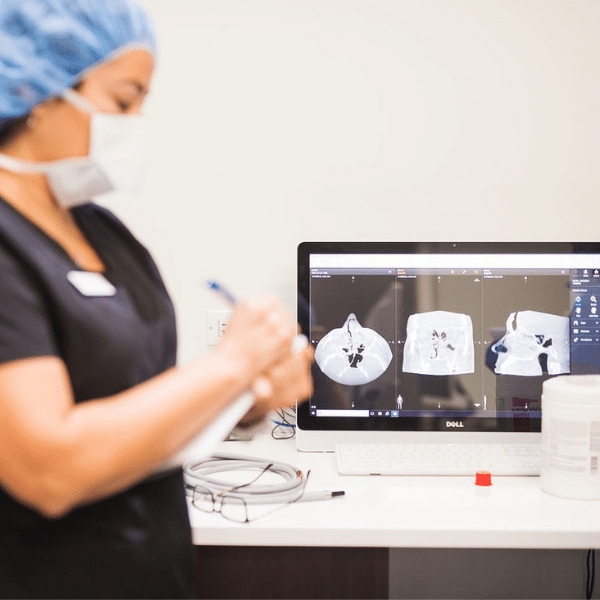
- Sinus imaging if structural blockage is suspected
- Assessment of Eustachian tube function when indicated
Reducing inflammation and restoring normal airflow can help improve pressure regulation.
Related Treatments
If ear fullness is linked to sinus or nasal conditions, related services may include:
- Chronic Sinusitis Treatment
- Balloon Sinuplasty
- In-Office Sinus CT Imaging
- Minimally Invasive Nasal Procedures
- Allergy Testing & Treatment
A structured evaluation helps determine the source of pressure and guide appropriate care.
Schedule a Consultation
If persistent ear fullness or pressure is affecting your comfort or hearing, a comprehensive evaluation can help clarify the cause and guide appropriate treatment.
How Would You Like to Get Started?
Choose the option that works best for you.
Request an Appointment
Speak with our team about your symptoms, your insurance and next steps.
Self-Scheduling Appointment
Book your in-office appointment with our sinus and snoring specialists.