How a Deviated Septum Affects Breathing
The nasal septum is the thin wall of cartilage and bone that separates the two nasal passages. When the septum is significantly displaced to one side, it can restrict airflow and contribute to chronic nasal obstruction.
A deviated septum may cause persistent difficulty breathing through the nose, mouth breathing, snoring, sinus pressure, and recurrent sinus infections.
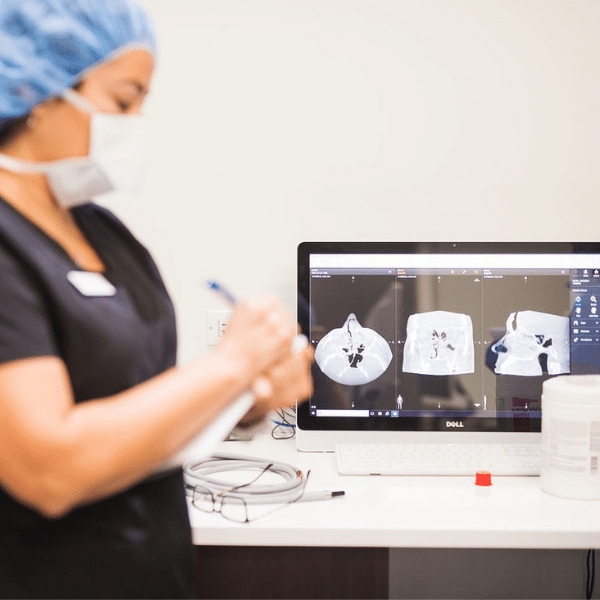
When structural narrowing interferes with normal airflow, evaluation can determine whether septoplasty may be appropriate.
How Would You Like to Get Started?
Choose the option that works best for you.
Request an Appointment
Speak with our team about your symptoms, your insurance and next steps.
Self-Scheduling Appointment
Book your in-office appointment with our sinus and snoring specialists.