
Are you getting frequent nosebleeds, especially during the winter? Consider the environment in your home. Many Floridians keep the air conditioner running at all time, which decreases the humidity in the room. Likewise, winter is an extremely low-humidity time of year. A decline in humidity may be the cause of your nosebleeds.
Humid air means there’s lots of moisture around, which can keep the skin inside your nose nice and flexible. Decreased humidity, however, means the air is absorbing whatever moisture it can, even if that moisture is from your body. If you’ve ever noticed your skin is dryer during the winter months, or if you leave your air conditioner running at all times, this is because the dry air is sucking the moisture from your skin. This problem can be exacerbated during winter months if people turn on the heater. The higher the temperature is, the less moisture there will be in the house.
This lack of moisture is a problem for the skin inside the nose, which tends to be thin. Your nose is full of tiny veins, which are incredibly close to the surface. If the nasal membranes in your nose become too dry, they might crack, which causes the blood beneath to rise to the surface.
The nosebleeds that result are more irritating than harmful; however, if they last more than 20 minutes and/ or occur frequently, you should visit your doctor.
Mucus is incredibly important in keeping us healthy, as it filters bacteria, smoke, dust, viruses, and allergens out of the air when you breathe in. In order to prevent dry noses, and the resulting nosebleeds, keep a humidifier in your home to slightly increase the humidity. You can also use a saline rinse to keep your nasal passages moisturized; these are available over-the-counter, as they are non-medicated. Last, it is important to stay hydrated, which keeps your cells moist and happy.
Care led by a board-certified rhinologist
Lee M. Mandel, M.D., J.D., F.A.C.S., F.A.R.S.
Founder of Florida Sinus & Snoring Specialists and a double board-certified ear, nose, and throat surgeon in Otolaryngology–Head & Neck Surgery and Facial Plastic & Reconstructive Surgery. Fellow of the American Rhinologic Society and past President of the Florida Society of Otolaryngology. Dr. Mandel and his team have treated thousands of South Florida patients for nasal-airway, sinus, and allergy conditions using minimally invasive, in-office care.
When nosebleeds are more than a dry-air problem
Most dry-air nosebleeds resolve with home care. When they recur, these in-office services find the underlying cause.
Deviated Septum & Septoplasty
A deviated septum can expose nasal vessels and drive recurrent nosebleeds.
Allergy Testing & Immunotherapy
Allergic inflammation and nose-rubbing can worsen dryness and bleeding.
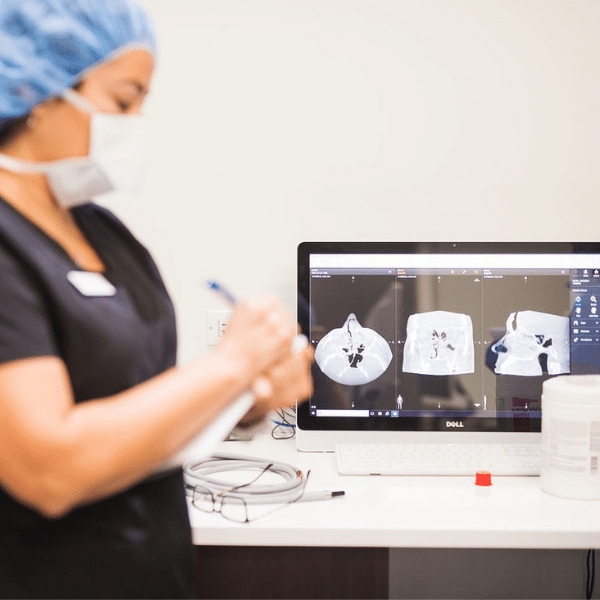
In-Office Sinus CT Imaging
Identifies structural causes when nasal symptoms keep returning.
Occasional dryness is normal. Frequent nosebleeds are worth getting checked.
A humidifier and saline usually fix dry-air nosebleeds. But nosebleeds that keep returning, or last more than 20 minutes, can point to a structural issue inside the nose. Florida Sinus & Snoring Specialists evaluates recurrent nosebleeds and nasal-airway problems in-office at our Fort Lauderdale and Plantation locations.